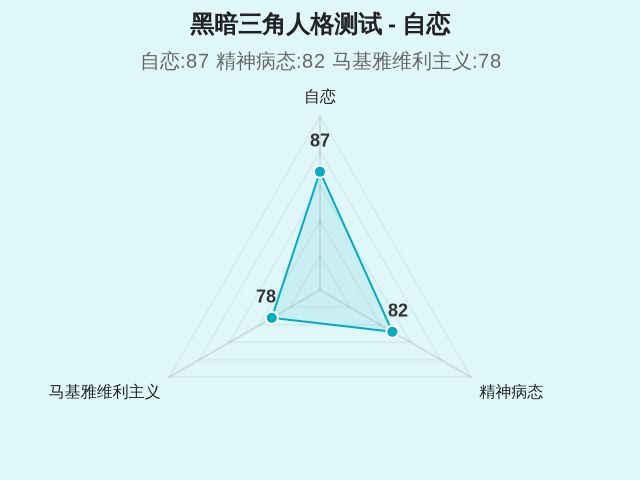
The Dark Triad refers to three distinct but overlapping malevolent personality traits: narcissism, Machiavellianism, and psychopathy. These traits are studied in clinical and social psychology due to their association with manipulative, exploitative, and antisocial behaviors. A Dark Triad personality test quantifies an individual’s expression of these traits using validated psychometric scales. The most widely used instrument is the Dirty Dozen (DD), a 12-item self-report questionnaire developed by Jonason and Webster (2010). Each trait is measured by four items rated on a 1–7 Likert scale.
Narcissism in this context denotes grandiosity, entitlement, dominance, and a need for admiration—not to be confused with clinical Narcissistic Personality Disorder (NPD). High scorers often exhibit confidence bordering on arrogance and expect special treatment. Machiavellianism reflects strategic manipulation, emotional detachment, and a cynical worldview. Individuals scoring high prioritize self-interest and view interpersonal relationships as transactional. Psychopathy involves low empathy, impulsivity, thrill-seeking, and shallow affect. Unlike clinical psychopathy (e.g., assessed via the PCL-R), subclinical psychopathy measured in the Dark Triad lacks criminality as a core criterion but retains callousness and disinhibition.
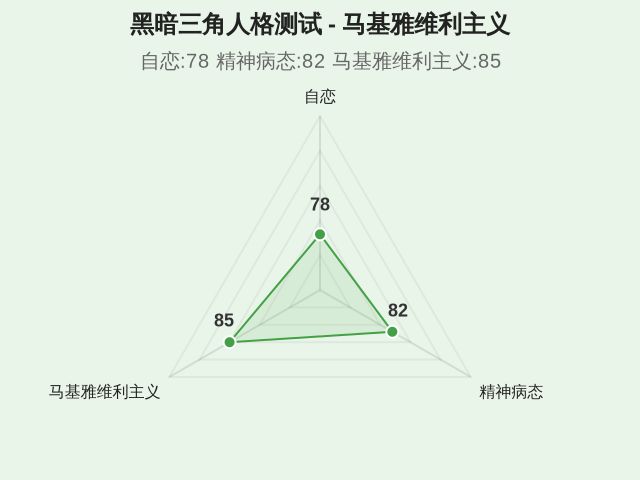
The Dirty Dozen items map directly to each construct: for narcissism—“I tend to want others to admire me”; for Machiavellianism—“I tend to manipulate others to get my way”; for psychopathy—“I tend to lack remorse”. Responses are summed per subscale (range: 4–28). Scores above 20 on any subscale suggest pronounced expression of that trait. However, interpretation requires caution: self-report measures are vulnerable to impression management, especially among high Machiavellian or narcissistic individuals who may underreport undesirable behaviors.
- Scoring benchmarks (approximate, population-dependent):
- Narcissism: Mean ≈ 16–18; >22 = high
- Machiavellianism: Mean ≈ 15–17; >21 = high
- Psychopathy: Mean ≈ 13–15; >19 = high
Alternative assessments include the Short Dark Triad (SD3), which uses 9 items per trait (27 total) and demonstrates better discriminant validity than the Dirty Dozen. The SD3 separates primary (interpersonal/affective) and secondary (lifestyle/antisocial) psychopathy facets more clearly. Research shows moderate correlations between the three traits (r ≈ 0.3–0.5), confirming overlap but also distinctiveness. For instance, narcissism correlates more strongly with extraversion, while psychopathy links to low agreeableness and conscientiousness in the Big Five model.
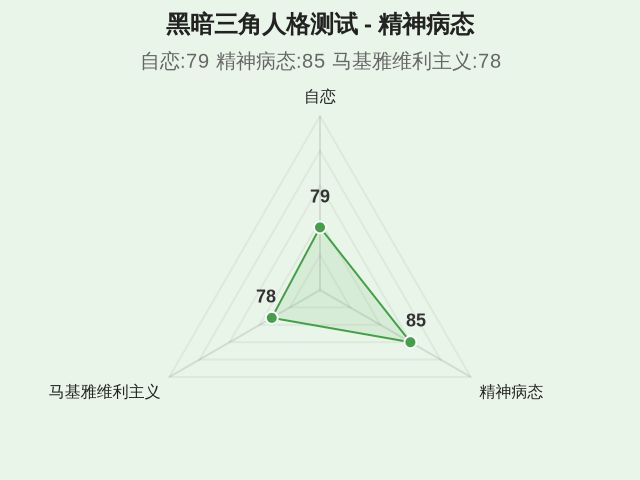
Practical implications of elevated Dark Triad scores vary by context. In organizational settings, high Machiavellianism predicts success in competitive, short-term negotiations but undermines long-term trust. Narcissism may drive leadership emergence yet increase risk of unethical decisions. Psychopathy correlates with counterproductive workplace behaviors, including sabotage and rule-breaking. In personal relationships, all three traits predict lower relationship satisfaction, higher conflict, and increased likelihood of infidelity—particularly psychopathy and Machiavellianism.
Clinical utility is limited. The Dark Triad measures subclinical traits in non-clinical populations. They are not diagnostic tools for personality disorders. However, they offer value in research on social dynamics, mating strategies, and ethical decision-making. Important caveats: cultural norms influence expression and reporting; Western samples dominate validation studies; gender differences exist (men typically score higher on all three traits, especially psychopathy). Repeated testing may yield inconsistent results due to state-dependent factors like mood or recent social experiences.